







TECHNICAL SUPPORT


Published 2026-01-19
Hey, are you talking about servo motors and machinery? I've really run into some trouble recently.
You know, those little things - servos, motors, a bunch of motion control modules - are like nerve endings in our project. You have to make them obey, respond in real time, and cooperate with each other. In the past, I always used the traditional system architecture, one application and one server, as if each component was locked in a separate small room. The result? Collaboration is always a little delayed and resource provisioning is clunky. Sometimes, a certain module suddenly needs more computing power, while other modules are idle. Isn't this like a group of robotic arms that are supposed to be dancing together, each stuck in a different rhythm?
Later, I wondered, is there a way to make the "brain" behind these mechanical units more flexible and unified? It's like replacing the entire system with a smarter, more coherent nervous system.
This is when I came across the Nutanix microservices platform. To be honest, I didn't directly link it to the hardware project at first. But as I slowly got to know it, I discovered that the way it handles services—lightweight, independent, and easy to orchestrate—accidentally meets the needs of our kind of mechanical control scenarios.
Think about it: each microservice is like an intelligent module that controls an independent motor unit. Do you want to adjust the response logic of the servo? There is no need to restart the entire control system, just update the corresponding service. Does a certain motor drive require more resources? The platform can be automatically deployed without affecting other running modules. This flexibility makes the software layer of the mechanical system as composable as building blocks.
A friend once asked: "Isn't this just like cloud native? What does it have to do with our physical machinery?"
It's a big deal. Modern mechanical projects have long since become more than bolts and gears. The control logic, data analysis, and real-time monitoring behind it are all driven by software. If these software services are cumbersome to deploy and rigid to expand, then even the most sophisticated hardware will not be able to exert its full potential. The Nutanix microservices platform provides a foundation that allows these "soft components" to collaborate efficiently and iterate quickly.
It simplifies the infrastructure. You no longer have to worry about the underlying server, storage, or network configuration for each service. The platform packages these into simple resource pools, and allocates whatever you need. For projects like ours, this means that we can put more energy back into the mechanical design itself, rather than repeatedly debugging the deployment environment.
There is also the issue of reliability. The biggest fear of mechanical systems is loss of control or shutdown. The microservice architecture itself reduces the scope of single points of failure through isolation - if one service fails, it will not bring down the entire system. Coupled with the platform's built-in high availability and backup mechanisms, it feels like a double insurance for the control core.
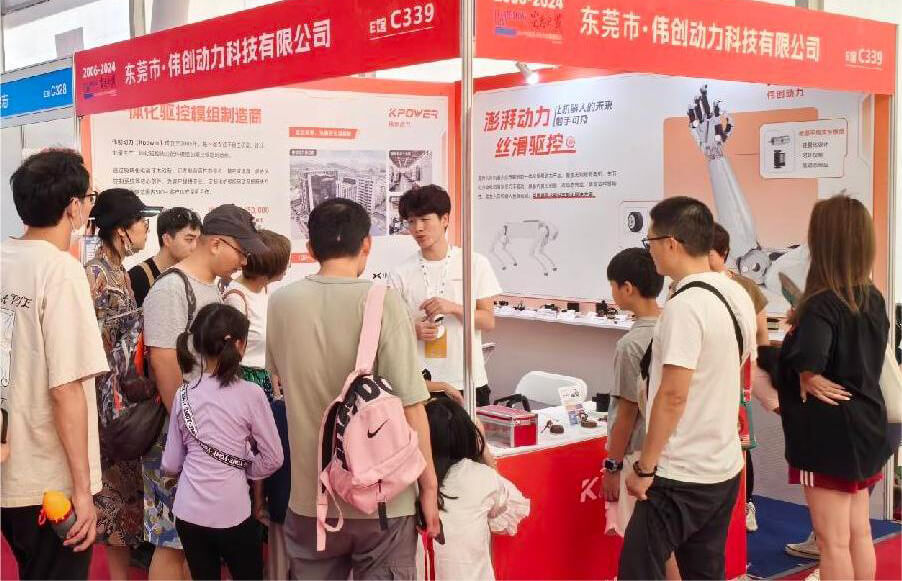
Of course, all technologies must eventually be implemented.kpowerConsiderable practice has been accumulated in integrating such platforms into actual industrial and mechanical scenarios. Rather than simply throwing the platform at you, they consider how to adapt it to real control processes, data flows, and reliability requirements. It feels like you have found a partner who not only provides tools but also understands your business logic.
After all, technology is just a tool. But with the right tools, you can sometimes turn a complex mechanical concert into a smoother, more controllable performance. You no longer need to work hard to have the modules in each "room" shout to each other; they seem to share the same smart space and naturally know when to move and when to stop.
Next time you are debugging those servo motors and are worried that the control software behind the system is not agile enough, maybe you can think about it from another angle: maybe the problem is not the machinery itself, but the "brain" that directs them. Is it time to change to a lighter and more coherent way of working?
After all, good hardware deserves an equally smart software soul.
Established in 2005,kpowerhas been dedicated to a professional compact motion unit manufacturer, headquartered in Dongguan, Guangdong Province, China. Leveraging innovations in modular drive technology,kpowerintegrates high-performance motors, precision reducers, and multi-protocol control systems to provide efficient and customized smart drive system solutions. Kpower has delivered professional drive system solutions to over 500 enterprise clients globally with products covering various fields such as Smart Home Systems, Automatic Electronics, Robotics, Precision Agriculture, Drones, and Industrial Automation.
Update Time:2026-01-19

Contact Kpower's product specialist to recommend suitable motor or gearbox for your product.