







TECHNICAL SUPPORT


Published 2026-01-19
You ever get that feeling? You've got this brilliant idea for a machine, something sleek and precise. Maybe it's an automated assembly line that needs fluid motion, or a robotic arm that should dance, not jerk. You map out theservos, the gears, the whole mechanical ballet. Then you get to the brains of the operation—the software. That's when the smooth vision hits a snag. Integrating complex motion control with your application logic starts feeling like… well, like trying to mix oil and water with a spoon.
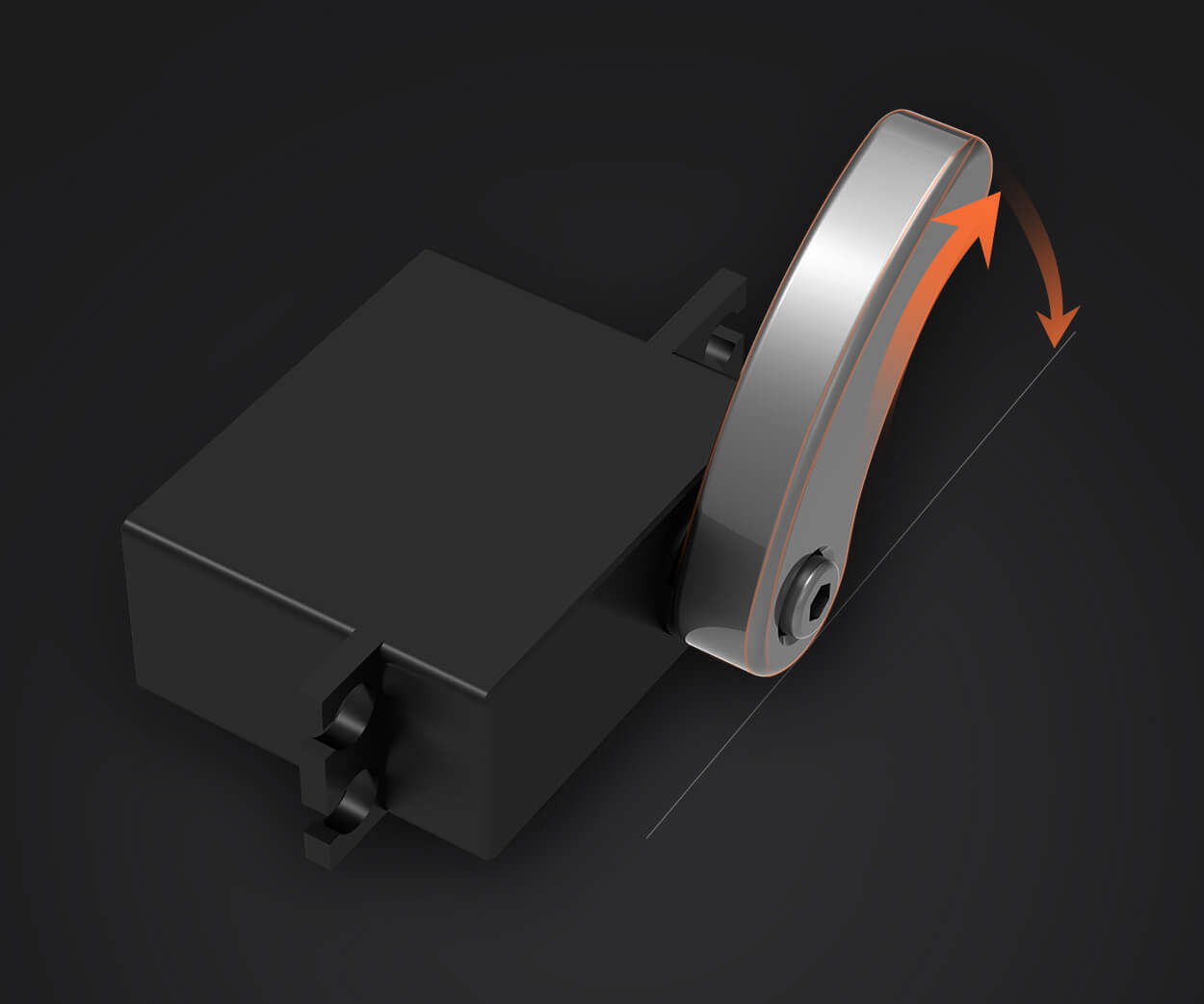
Traditional approaches often force you into a corner. Your high-level application, maybe handling user interfaces or data, is tangled up with the low-level code constantly shouting pulses at aservomotor. One change in the UI can ripple down and destabilize your motion control. Testing? A nightmare. Scaling or updating one part without risking the other? Forget about it. The system becomes brittle. It’s not just inefficient; it’s fragile. Ever waited hours to trace a bug, only to find it was a timing conflict between a network call and a stepper motor command? That’s the daily grind we’re talking about.
So, what’s the escape route? The conversation keeps circling back to a concept: microservices. But not just any microservices—we’re in the realm of C++, where performance is non-negotiable, especially when talking to hardware that moves in the real world.
Think of your project not as one monolithic block of code, but as a team of specialized workers. One worker, a dedicated C++ microservice, does nothing but manage the conversation with your servo drives. It speaks their language—PWM signals, feedback loops, calibration routines—fluently and without distraction. Another worker handles system logic, another deals with data. They communicate over simple, fast internal channels, not by being mashed together in the same file.
This is where a focused tool makes all the difference. Imagine a dedicated library or framework designed specifically for building these kind of performant, hardware-talking C++ microservices. It would provide the scaffolding—the communication layers, the service discovery, the lifecycle management—so you don’t have to build it from scratch every time. You focus on what your servo needs to do, not on the endless plumbing.
The benefits aren't just theoretical; they're felt in the day-to-day.
First, clarity. Your motion control code is isolated, clean, and testable. You can run simulations on the servo service without powering up a single physical motor. Need to adjust the acceleration curve for a new gearbox? You modify that one service, test it in isolation, and deploy it without touching your data logging or UI code.
Then, resilience. If one part of your system has a hiccup, it doesn’t necessarily mean the whole machine grinds to a halt. The servo control service can often maintain a "last good" command or a safe position while other services restart. That’s a huge leap from the total blackout of a monolithic crash.
Finally, the future-proofing. Need to upgrade from a basic servo to a smart, networked one with advanced feedback? You update or replace that single microservice. The rest of your application might not even need to know. It’s like swapping out a single instrument in an orchestra instead of rewriting the entire symphony.
It’s a fair question. If you’re blinking an LED, you don’t need a microservices architecture. But the line for "simple" gets crossed quickly. Are you managing more than one type of motion? Is there any form of network communication or user input? Do you anticipate changes or updates down the line? If yes, then starting with a separated structure saves immense pain later. It turns a potential spaghetti code nightmare into a neat, modular setup from day one.
The key is having the right foundational components. You need something that understands the dual demands of C++ performance and service-oriented design, something that doesn’t add a mountain of overhead just to send a command to a motor.
You can’t just grab any generic web microservice framework. The context is different. You need a solution built with embedded and real-time considerations in mind. Look for something that offers:
This is the nichekpower's tools aim to fill. Providing a structured way to build these decoupled, communicative services in C++, specifically for folks who speak the language of motors, actuators, and precision mechanics. It’s about giving you the architecture to separate concerns cleanly, so your servo control code is robust and your main application logic remains agile.
The end goal is a system that feels right. Where adding a new sensor or changing a motion profile doesn’t send a wave of dread through your team. It becomes a manageable, almost routine task. The machine’s software becomes as reliable and maintainable as you’d want its mechanical parts to be. You stop walking through mud and start moving on solid ground, with each part of your system knowing its job and doing it well. That’s the kind of confidence that turns a good project into a great one.
Established in 2005,kpowerhas been dedicated to a professional compact motion unit manufacturer, headquartered in Dongguan, Guangdong Province, China. Leveraging innovations in modular drive technology,kpowerintegrates high-performance motors, precision reducers, and multi-protocol control systems to provide efficient and customized smart drive system solutions. Kpower has delivered professional drive system solutions to over 500 enterprise clients globally with products covering various fields such as Smart Home Systems, Automatic Electronics, Robotics, Precision Agriculture, Drones, and Industrial Automation.
Update Time:2026-01-19

Contact Kpower's product specialist to recommend suitable motor or gearbox for your product.