TECHNICAL SUPPORT


Published 2026-02-24
Friends who play drones or make robots, do you often encounter this annoying problem: you install the newly purchased smallservowith great expectations, only to find that it either shakes like a sieve, or is so weak that you can't even break a piece of plastic, or even "strike" within a few days? In fact, many times it is not that the quality of theservoitself is poor, but that we did not choose the right one. Today we will talk about how to choose the most suitable "little heart" for our favorite work - a microservo.
Faced with the wide variety of 9-gram, 12-gram or smaller servos on the market, your first reaction is definitely confusion. What do the numbers and letters in the model number mean? It's actually very simple. This is usually a proxy for the size, weight or torque of the servo. For example, the most common "9-gram servo" refers to its weight of about 9 grams. You must first determine how much installation space your work requires and how much load it can withstand, and then based on this physical limit, select a roughly suitable model range. This is the most critical first step. Don't just buy one and stuff it in your head.
After delineating the model, you have to read their "physical examination report" carefully. On the parameter list, the two most important indicators are torque and speed. Torque determines the amount of force, and its unit is usually kilogram·cm (kg·cm), which means how many objects can be pulled 1 cm away from the center of the steering axis. The speed refers to the time it takes for the servo to turn 60 degrees, such as 0.12 seconds/60 degrees. You must make a trade-off based on the application scenario. If it is used for the legs of a robot, it needs a higher torque; if it is used for a camera gimbal, it needs one with uniform speed and fast response. If you understand these two indicators, you will basically not make a wrong purchase.
Different application scenarios have different torque and speed requirements for the steering gear. When applied to robot legs, a large torque is required to provide sufficient power support to ensure that the robot can stably walk, jump and other actions. For a camera gimbal, uniform speed and fast response are crucial, so as to ensure the stability and smoothness of the shooting image and accurately capture various scenes. Only by deeply understanding and weighing the two key indicators of torque and speed according to actual needs can we make the right decision when choosing a steering gear and avoid purchasing mistakes due to improper understanding of parameters.
After finally installing it, the servo started to vibrate like a "wind", which was very frustrating. Don't rush to blame the servo for being broken. Most of the jitter problems actually come from "power supply" and "signal". The micro servo is small in size and requires a lot of current at the moment of startup. If the power supply cannot be powered or the wire is too thin, it will vibrate out of control when the voltage fluctuates. Also, if the PWM signal output by the flight controller or receiver is unstable, it will also cause it to be at a loss. You can try to supply power to the servo separately, or check whether the signal wire of the control board is welded firmly. In many cases, the problem can be solved easily.
What's the difference between these two brothers? To put it simply, analog servos are like old-fashioned telephones, which have to wait for instructions constantly; while digital servos are like modern mobile phones, responding faster and processing instructions more efficiently. Because the digital servo has faster processing speed, it responds more quickly when starting, has more accurate positioning, and is more stable when maintaining power. Of course, the price is slightly more expensive. Analog servos are cheaper and are completely sufficient for scenarios such as the ailerons of fixed-wing aircraft that do not require frequent fine-tuning. If your project requires fine control, such as a robotic arm, then digital servos are definitely the first choice.
️Step 1: Clarify your project requirements
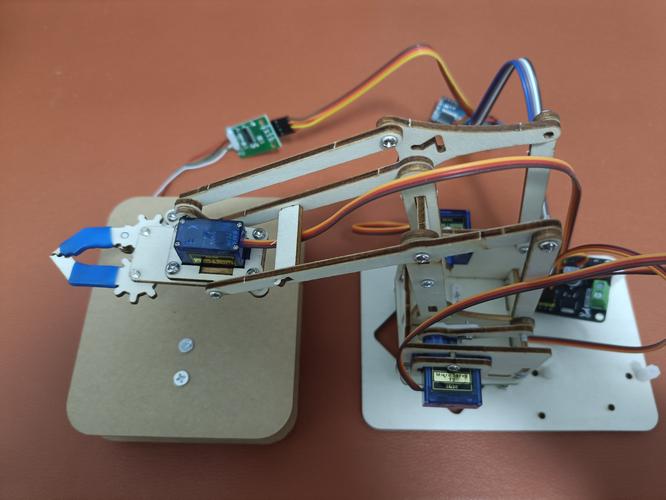
Ask yourself first, does your model need it to exert force (strong twisting), does it need it to run fast (quick response), or does it need it to stand firm (precise positioning)? Write down your core needs.
️Step 2: Measure the installation space
Use a ruler to measure how much space is left for the servo in your equipment. Note down the length, width and height. This physical size will directly eliminate a large number of inappropriate models.
️Step 3: Compare core parameters
With your needs in mind, go to the e-commerce platform to search for the model, focusing on "torque" and "speed" in the parameter list. If the strength and speed are consistent, then confirm whether the working voltage is within the power supply range of your system.
️Step 4: Consider control methods
Confirm whether the signal output by your controller (flight control, receiver or microcontroller) matches the signal type required by the servo (mainly PWM frequency and pulse width range). Most standard micro servos are compatible, but if it is a less common digital servo, it is best to take a closer look at the manual.
There are indeed many imitations on the market now. If you spend the money to buy a fake product, not only the performance will be reduced, but the equipment may also be burned out. The safest way is to look for official channels, such as directly searching the brand's official website, finding their list of authorized dealers, and buying from there. In addition, after receiving the goods, you can take a closer look at the gear material and shell workmanship of the servo. Genuine products usually have very fine details and feel smooth and no jamming when turning the output shaft, while imitation products often have burrs and are astringent when turning.
After talking so much, I wonder what is the most difficult steering gear problem you have ever encountered when working on a project? Is it because the installation size is inappropriate or because the parameters are not understood, causing the car to overturn? Welcome to share your experience in the comment area. If you think this article is helpful to you, don’t forget to like it and share it with more friends who play maker!
Update Time:2026-02-24

Contact Kpower's product specialist to recommend suitable motor or gearbox for your product.