TECHNICAL SUPPORT


Published 2026-02-20
Is it a headache to get stuck on steering gear selection when innovating products? There are all kinds ofservomoduleson the market, and the parameters all look similar. After buying them, you find that the torque is insufficient, the control is inaccurate, and the motherboard may even be burned out. This is indeed a pain point for many makers and product managers - although theservois small, choosing the wrong one can stall the progress of the entire project.
The first step in choosing aservois not to look at the parameter list, but to ask yourself: What exactly does the servo do in my product? Does the robotic arm need to grasp accurately, or does the robot car need to steer flexibly? Different scenarios have completely different needs for steering gear. For example, if you are making a bionic robot with many and complex joint movements, you must choose a digital servo with a fast response; if you are making a simple door opening and closing mechanism, an ordinary analog servo will be enough.
After determining the application scenario, look at the three core parameters: torque, speed and angle range. Torque determines how much load can be driven, speed affects the smoothness of the movement, and angle range is related to the range of motion. Taking a common small robotic arm as an example, each joint requires a different torque. The joints near the base require greater torque, while those near the end pay more attention to accuracy.
I believe you have encountered this situation: the torque is enough according to the parameters, but the servo squeaks and cannot move after loading the load. This is usually due to neglect of dynamic loads and impact forces at start-up. For example, when grabbing an object, inertia will cause the actual required torque to be 30% to 50% higher than the statically calculated value.
The solution is to leave enough margin. It is recommended to select 1.5 to 2 times the theoretical calculated value. At the same time, pay attention to the material of the steering gear. Metal gears are more durable than plastic gears and can withstand greater impacts. If space permits, you can also consider installing a reducer to increase the output torque. Although some speed will be sacrificed, the result will be stability and reliability.
Accuracy issues are often the easiest pitfalls for novices. Although the command was issued at 90 degrees, the servo was turned to 92 degrees, which is not acceptable in a precision assembly scene. There are two main factors that affect accuracy: the dead zone setting of the servo itself and interference from external circuits. Cheap servos have a large dead zone and have no response at all when adjusting small angles.
Improving accuracy can start from both hardware and software aspects. For hardware, choose a position sensor servo with feedback. For example, a magnetically encoded servo is more accurate than an ordinary potentiometer. PWM signal filtering can be done on the software to reduce interference caused by power supply fluctuations. A more advanced approach is to use a closed-loop control algorithm to read the actual position of the steering gear in real time and compensate.
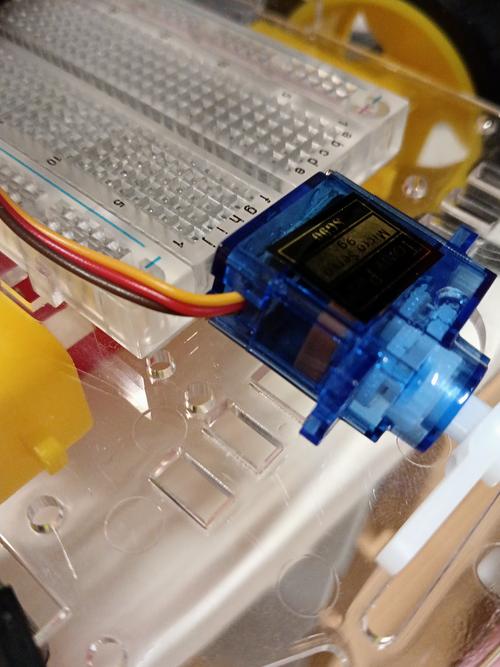
Serious heating of the steering gear will not only affect the service life, but may also cause malfunction. Many friends find that the servo is hot, and their first reaction is to add a heat sink. In fact, it only treats the symptoms but not the root cause. The core cause of heating is usually overload or unstable operating voltage. When the steering gear works in a locked-rotor state or near the limit torque for a long time, the current surges and the temperature naturally rises.
Check whether your power supply is sufficient. Insufficient power will cause the voltage to drop. In order to maintain the output, the servo will increase the current, creating a vicious cycle. In addition, check whether there is any jamming in the mechanism design and whether the rotation is smooth. Properly set the neutral point and movement range of the servo to avoid holding it at the physical extreme position for a long time, which can also effectively reduce the temperature.
Poor contact is the number one killer of steering gear loss. Especially when multiple servos work together, common ground problems and too thin power lines will cause signal disorder. Many people have no problem plugging and debugging wires on a breadboard, but problems occur as soon as the product is made. The problem lies in the wiring method.
It is recommended to use the star wiring method. The power cord of each servo is led directly from the power module and is not connected in series. The signal line should be as short as possible. If the distance is long, it needs to be shielded or twisted pair. In high current circuits, solder joints are more reliable than connectors. For joints that require frequent movement, remember to leave margin for the wire and protect it with winding tube to prevent breakage.
Choosing the right supplier is more important than choosing the right product. Searching forservo modulesonline, the prices range from a few yuan to several hundred yuan, and the parameters are quite beautiful. It is recommended to first understand the reputation through professional technical forums and maker communities, and see which company other friends who make similar products use. A truly reliable supplier not only sells products, but also provides detailed technical documentation and selection guidance.
You can focus on brands that have physical factories and can provide customized services. For example, if the servo you need is of special size or voltage, can they modify it accordingly? It is best to search the company's official website directly to see if their product line is complete and whether they have independent research and development capabilities. A supplier with technical background can often help you avoid many detours in research and development.
What is the most difficult servo problem you have encountered while making products? Have you ever experienced project delays due to improper selection of steering gear? Welcome to share your pitfall stories in the comment area so that other maker friends can avoid detours. If you find this article helpful, don’t forget to like and save it, and take it out for reference next time you choose a servo.
Update Time:2026-02-20

Contact Kpower's product specialist to recommend suitable motor or gearbox for your product.