







TECHNICAL SUPPORT


Published 2026-02-23
Have you ever encountered this situation: when making a new product, you need to choose aservoto control a certain action. When you check the information, you find that there are two types of "linearservos" and "rotaryservos" on the market, and you are suddenly confused? I don’t know which one is more suitable for your project, and I’m afraid that choosing the wrong one will affect product performance. This is indeed the number one problem that many friends who are engaged in product innovation will encounter. Don’t worry, today we will talk about this thoroughly and help you cure your phobia of choice.
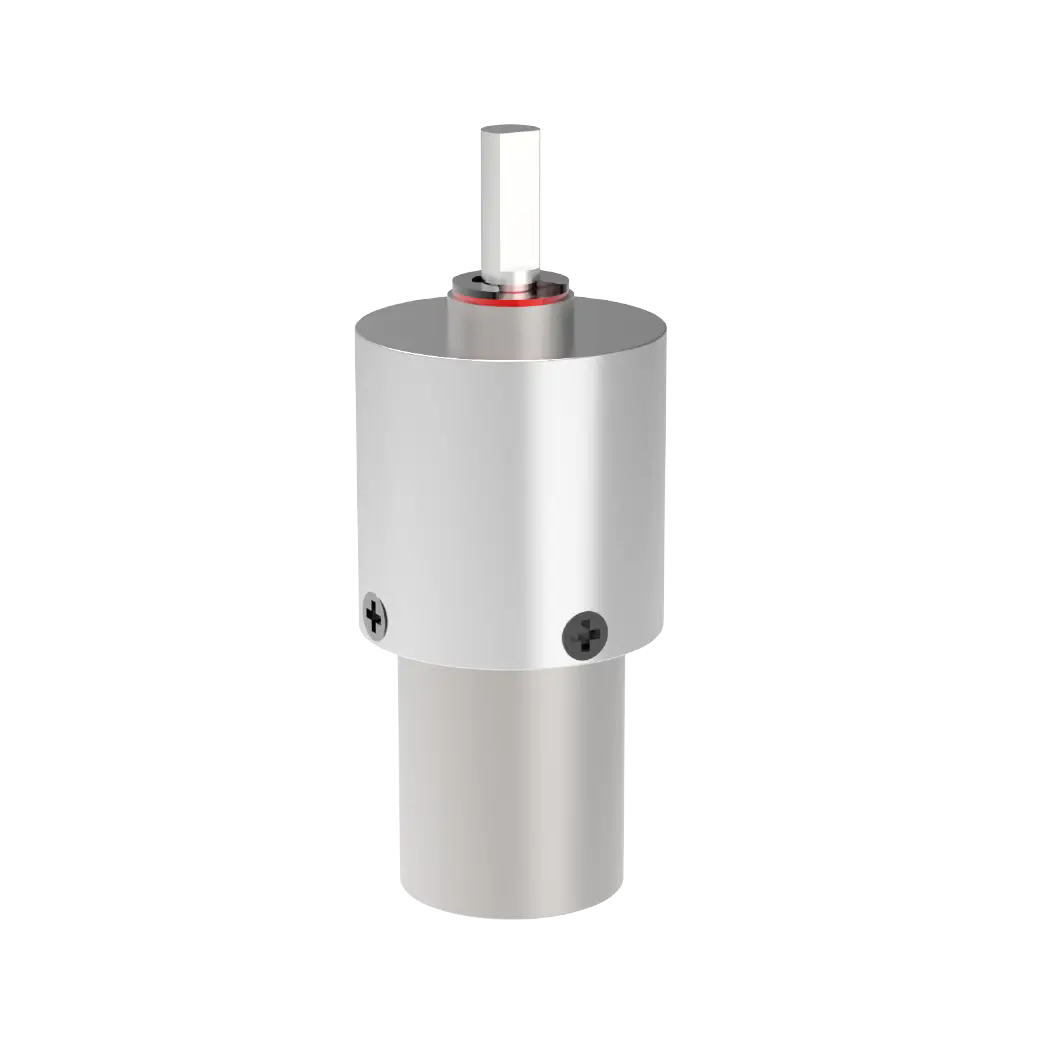
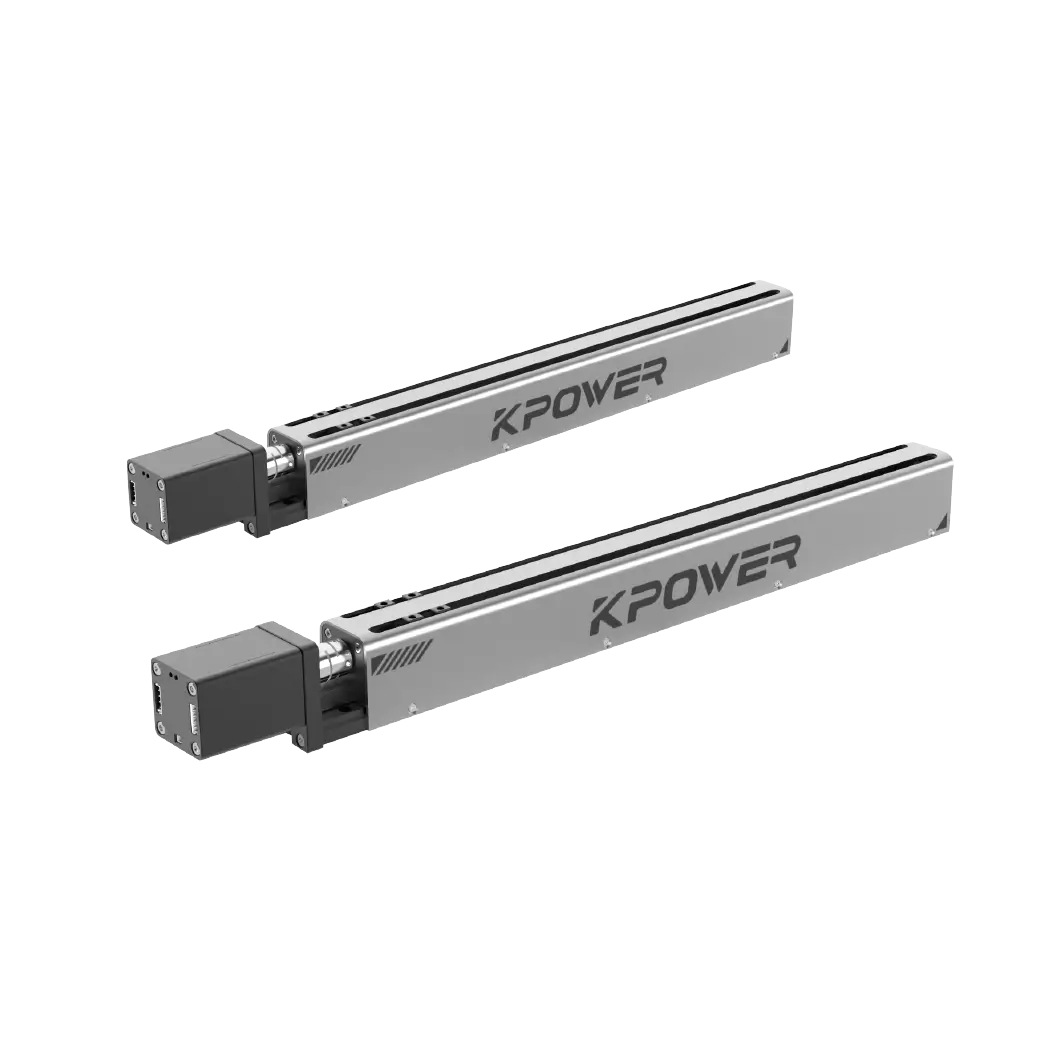
To put it simply, they are "cousins". They both provide power, but in completely different ways. You may be more familiar with the rotary servo. It outputs a circular motion, just like when we turn a door handle by hand. As for the linear servo, it directly converts the rotational motion of the motor into linear motion of push and pull through the internal screw structure, just like a cylinder. Once we understand "how they move", we can continue to talk about how to choose.
This depends on what actions your product ultimately requires. If your design is to make a wheel spin, or to make a rocker arm swing like a pendulum, then the rotary servo is your first choice, it is born to do this. But if your action is a simple push and pull, such as pushing out an object or opening a cover, you can use a linear servo to reach the position in one step, eliminating the need to add a bunch of connecting rods and rocker arms behind the rotating servo to "convert" the action. The structure can be simplified a lot.
This depends on the internal spatial structure of your product. The rotary servo is generally a square or round block with the output shaft on the outside and the installation position is relatively fixed. But because the linear servo needs to expand and contract, the space it occupies changes dynamically, and you have to reserve the length for its full extension. ️ However, one advantage of the linear servo is that its output end is directly against the component to be pushed, with fewer intermediate links, and the overall structure is more compact. You have to draw a sketch and compare it to see which layout is more conducive to the use of space.
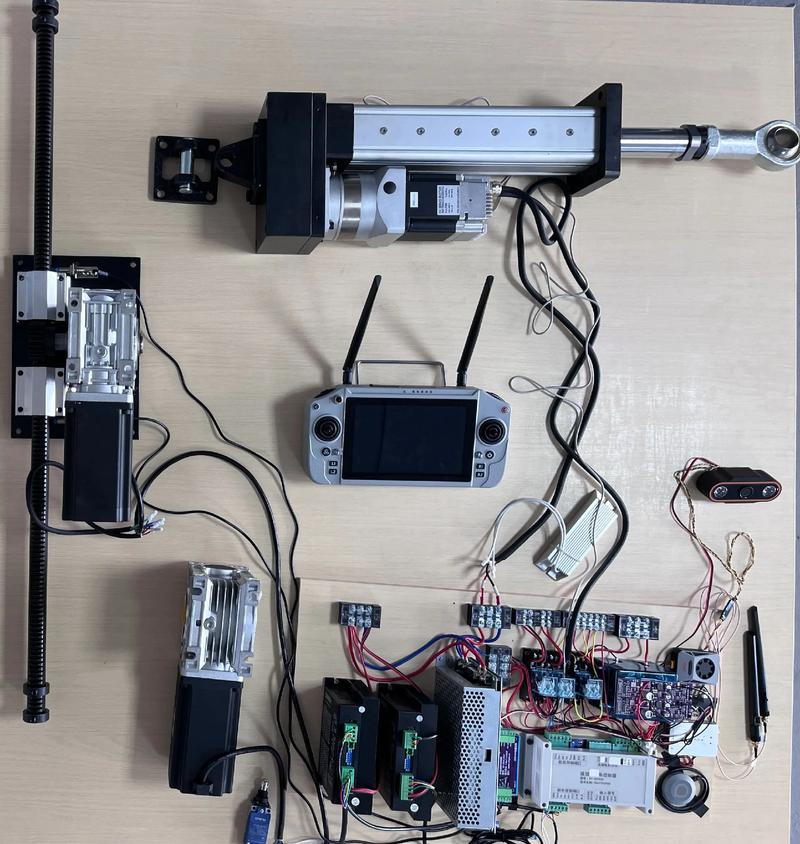
This is a very critical indicator. Under the same volume and weight, linear servos can usually output much greater thrust than rotary servos. This is due to the "leverage" effect of the screw inside it. Just like using a screwdriver to pry something off, it takes much less effort than pushing it directly with your hands. If your product needs to push a relatively heavy load, such as lifting a heavy lid, then the linear servo has a very obvious advantage in this regard, achieving great strength with a small size.
Modern servos can control position through PWM signals, which they have in common. But in terms of accuracy, because the linear servo's action is linear motion, its position control feedback is directly the number of millimeters of displacement, which is very intuitive. The rotating servo controls the angle. You have to go through complex calculations to convert the angle into the displacement of the end of the push rod. If there is a loose mechanical structure in the middle, the accuracy will easily deviate. Therefore, for precise control of where the putter head will eventually stop, linear servos are more direct and reliable.
Durability mainly depends on the application scenario and stress conditions. If the rotary servo keeps swinging with load, the wear of the bearings and gears will be a consideration. The linear servo, because of the self-locking characteristics of the screw drive, can maintain its position even after a power outage. In scenarios where it is necessary to hold a heavy object for a long time, it is more labor-saving and more friendly to the motor and gears. Of course, if the linear servo often bears lateral force (that is, the direction of push is incorrect), the wear on the internal guide rails will be great. This should be avoided when designing the installation structure.
In terms of price, for products of the same level, linear servos are usually slightly more expensive than rotary servos because they have additional screw rods and guide mechanisms inside, making the structure more complex. But you can’t just look at the unit price, you have to calculate the general ledger. Using a linear servo may save a complex connecting rod transmission mechanism, save mold opening costs, and save assembly time. After all this is calculated, it may be more cost-effective. So my suggestion is to consider the action requirements first, and then comprehensively evaluate the total system cost. Don’t just be limited by the initial unit price.
After talking so much, the core of the choice is actually to see what action your product wants to make. If you think about this clearly, the answer will basically come out. If you are currently selecting a model for a project, you may wish to search the official website of a professional steering gear manufacturer, such as "Jinyuan Motor" or similar companies. Taking a look at their product library and application cases will give you a more specific understanding of actual application scenarios. So I want to ask you a question: How does the product you make, the component that needs to be driven, "move"? Is it a simple push and pull, or does it need to be an arc? Welcome to leave a message in the comment area and let’s discuss it together! If you find the article useful, don’t forget to like and share it with more friends who need it.
Update Time:2026-02-23

Contact Kpower's product specialist to recommend suitable motor or gearbox for your product.