







TECHNICAL SUPPORT


Published 2026-02-23
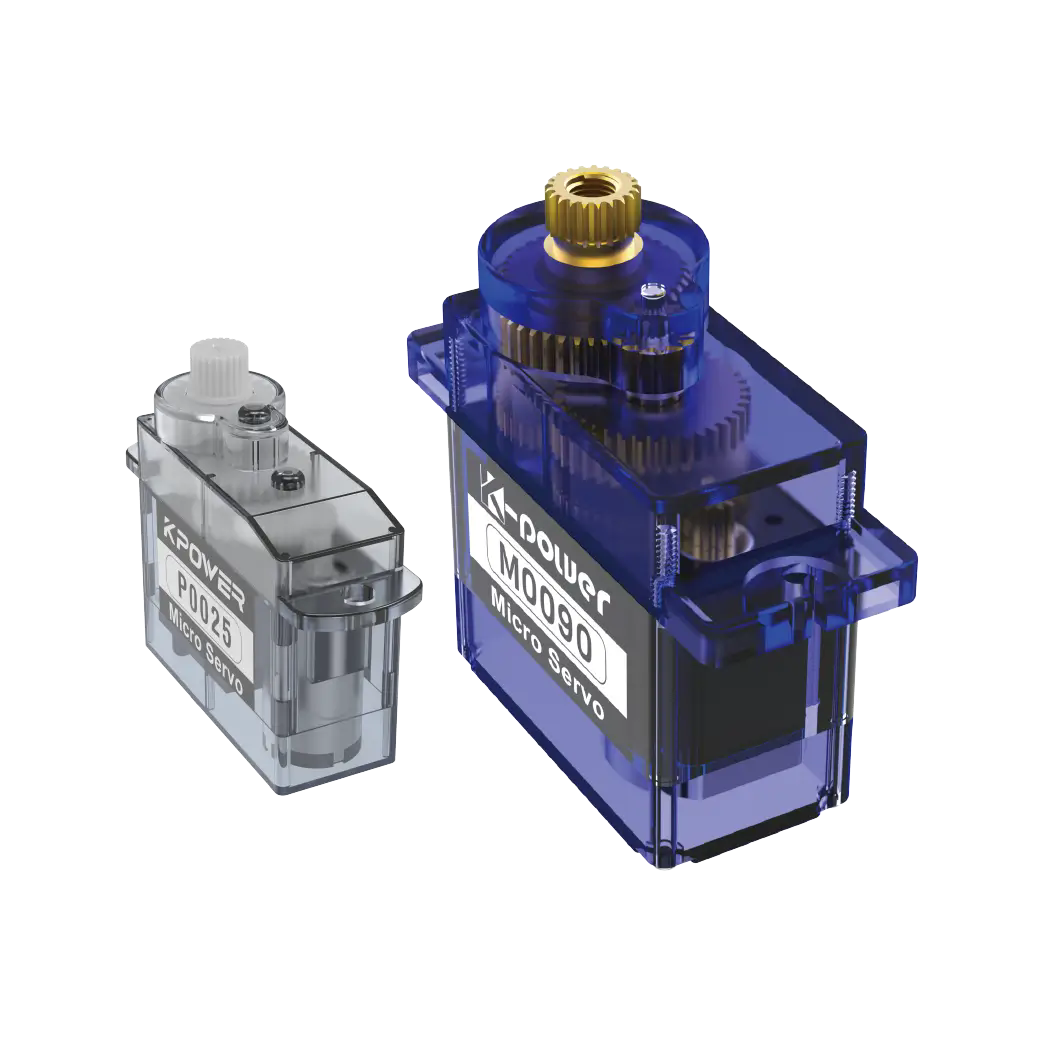
Hey, friends! I don’t know if you have ever encountered this situation: you worked hard to design a cool little invention, but theservothat was installed either couldn’t turn in place, or it kept shaking, making you feel emo? Don’t worry, today we will talk about the micro 90servo, which has a good reputation in the circle, to see if it can solve your urgent needs and help you turn your ideas into reality.
Many friends who have just started playing with servos always feel that the greater the torque and the wider the angle, the better. Actually, not necessarily! Think about it, in those robotic arm joints, camera heads or car steering structures, many times we just need it to turn 90 degrees. If the angle is too large, it will increase the difficulty of control, and it will be troublesome to write the program. This kind of steering gear is specially designed for 90 degrees. Its physical limit is right there. When you give a signal, it will turn to the designated position steadily. It will not turn too much, and the gear will not be damaged due to long-term impact on the limit. To put it bluntly, it is designed for precise control and can make your project logic instantly clear.
Moreover, using this kind of servo, your code will become extremely simple. In the past, you might have to calculate the pulse width corresponding to various angles, and also deal with boundary conditions to prevent the servo from overturning. What now? Just give it 0 or 1 directly, or use standard library functions such as 90 and 180, and it will respond accurately. This not only lowers the programming threshold and allows newbies to quickly create stylish works, but more importantly, improves the stability of the system and reduces many potential bugs. You want to spend your energy on more creative features instead of debugging these basic actions every day, right?
First of all, we must mention robots! Especially desktop-level small robots. If you want the robot to bow its hands or tilt its head to express confusion, the 90-degree range is just right. The movements are not too big and exaggerated, but enough to express the mechanical agility. You can use it as the finger joints of the robot, and with a few servos, you can achieve simple grabbing actions. Imagine a robot that can pick up small candies with two fingers. Isn't it more interesting than a robot that can only spin in circles?
In addition to robots, it is also a treasure in the field of model making. For example, in the steering system of remote control cars, the steering gear angle corresponding to the steering rod stroke of most remote control cars is about 90 degrees. When you use it, the steering will be very linear. The wheels will turn as much as you turn, and the control feeling will rise linearly. There are also those FPV (First Person View) camera gimbals. You need the camera to rotate smoothly up, down, left, and right. The 90-degree range can cover most shooting angles without letting the edge of the screen capture the servo arm itself. Used on automatic doors and elevators in miniature landscapes, the effect is outstanding and makes the entire scene come alive.
️Step one: Look at the torque, don’t just look at the price
Torque determines how heavy it can do. If your servo is used to flip a light switch, then 1-2 kg of torque is enough. But if you are driving a robotic arm to grab an object, you must calculate the required torque based on the weight and length of your arm. Don't be greedy for cheap and buy those servos with false height marks. The actual measured torque is not enough and you can't lift things, so your work will be in vain. Read more reviews of other players and find actual test data. This effort cannot be spared.
️Step 2: Look at the teeth, metal teeth or plastic teeth
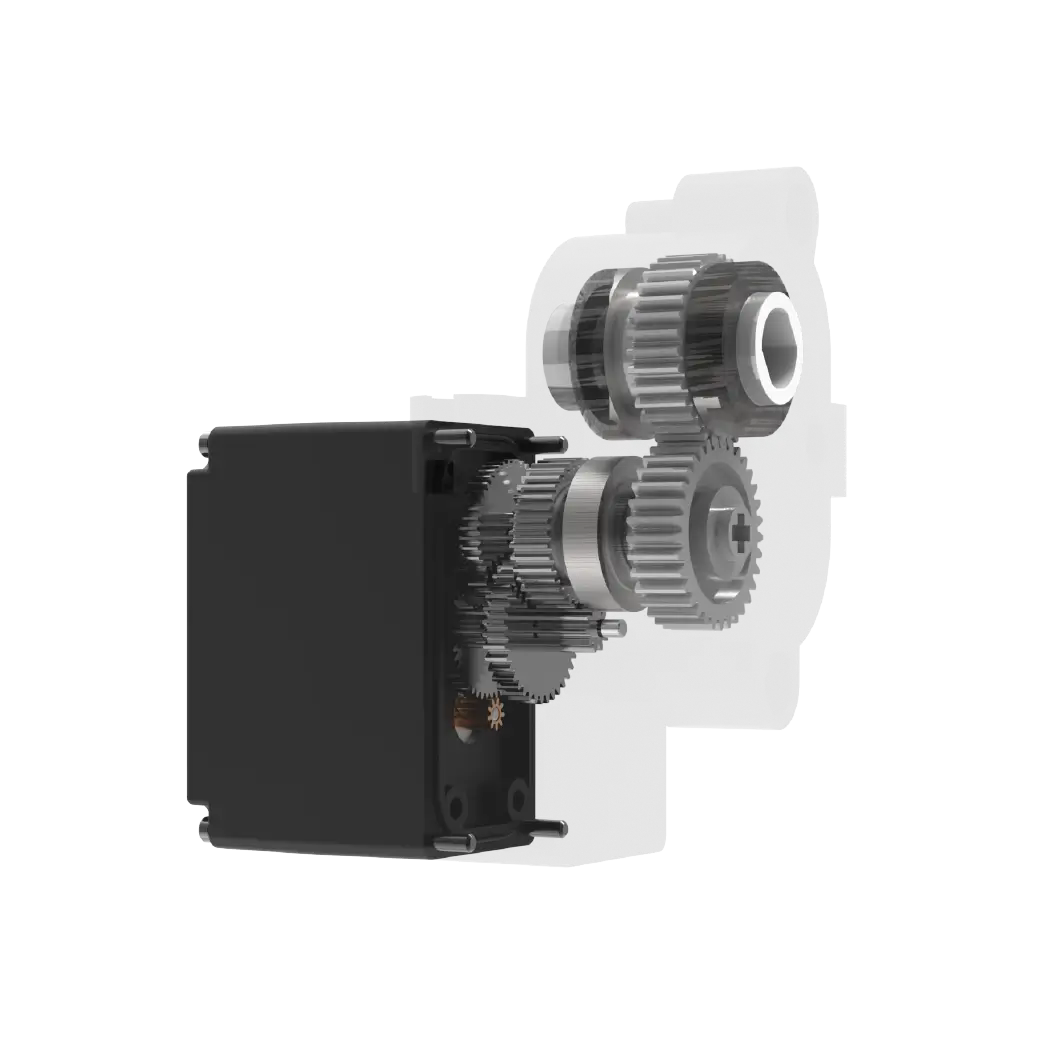
This is a classic multiple choice question. Metal teeth (usually copper teeth) have high strength and are wear-resistant, but they are expensive and heavier. Plastic teeth are cheap and make little noise, but they can easily break due to violent use. My suggestion is that if your project requires a large amount of force on the servo, or the movement is relatively frequent, it is better to use metal teeth instead of gritting your teeth. If it is a small ornament that needs to be moved occasionally, or if the budget is very tight, plastic teeth can also handle it. In addition, check whether the output shaft has a bearing. The empty position of the bearing is small and the accuracy is higher.
As soon as many friends got the servo, they hurriedly tightened the screws with all their strength. As a result, the servo housing was deformed and the internal gears were stuck. This is really a lesson of blood and tears! When installing the screws, stop immediately when you feel resistance. Just apply a little more force. The steering gear casing is usually made of plastic parts. Over-tightening will cause the internal structure to deform, which may cause the steering gear to become stuck, or even cause it to be scrapped. Remember, it’s really good when it’s just right, don’t get stuck with screws.
Another common pitfall is that the steering gear plate (rudder arm) is installed crookedly. Before pressing the servo plate onto the output shaft, be sure to power on the servo and let it return to the neutral position (usually 90 degrees). Then align the servo plate to the center of the mechanism you want to drive and install it. If you install it without alignment, it will not only make your structure crooked in the initial position, but also damage the servo due to excessive torque when it moves to the extreme position. This little bit of patience can save you a lot of trouble.
The most direct benefit is that the project success rate is greatly improved. Think about it, if you control your movements accurately, your robotic arm can accurately place things at designated locations, and your car can run steadily along the white line. This sense of accomplishment is incomparable. You will change from a "debugger" who is worried about the servo being out of control to a "creator" who focuses on functional design. Moreover, because the servo itself is of reliable quality, your work will be more durable and will not suddenly "fall off" when you take it out for display.
In the long run, you will establish a "reliable" reputation in the circle. Whether you are participating in a competition or sharing your work with friends, everyone will think that the project you are working on is not only a good idea, but also has a high degree of completion and stable operation. This will also encourage you to take on more complex projects, forming a positive cycle. Making good use of a key component can often improve your entire skill tree, allowing you to go further and more confidently on the road to electronic production.
If you want your servo to last longer, power supply is the core. Although the micro servo is small, the instantaneous current when the rotor is blocked cannot be underestimated. Don't think about using the 3.3V or 5V pins on the development board to drive it directly. That current will be pulled out instantly, causing the microcontroller to restart. Be sure to use an independent power module to power the servo, and connect the power ground and signal ground of the servo to the GND of the microcontroller. This can not only ensure sufficient power but also ensure the stability of the control signal, which is the basis for long-term stable work.
Routine maintenance is also critical. Pay attention to the cleanliness of the working environment to prevent dust and debris from entering the steering gear box. If you find that the steering gear operation sound becomes abnormal or there is a sense of lag, please check it in time. There may be debris in the gears, or the grease may have dried up. For metal gear servos, adding a little grease can effectively extend the service life. In addition, set the range of motion in the program and try not to leave the servo in a locked-rotor state for a long time, which will quickly heat up and damage the motor. Give it some rest and it will stay with you longer.
After reading this, do you feel more confident about your project? I wonder what is the most troublesome problem you have encountered when actually using the steering gear? Welcome to leave a message in the comment area, let's communicate and discuss together. If you think this article is helpful to you, don’t forget to like and share it with more friends who need it!
Update Time:2026-02-23

Contact Kpower's product specialist to recommend suitable motor or gearbox for your product.